September to December 2026 Calendar follows a fall term from its opening weeks to the last Thursday of December. A four-month view works well for a student with several major assignments, a parent coordinating performances, or an instructor tracking the return of a long-running project. Put classes and homework into a daily planner. Keep this page for the dates that compete for the same stretch of preparation time, even when the deadlines appear in different months.
Free Printable September to December 2026 Calendar
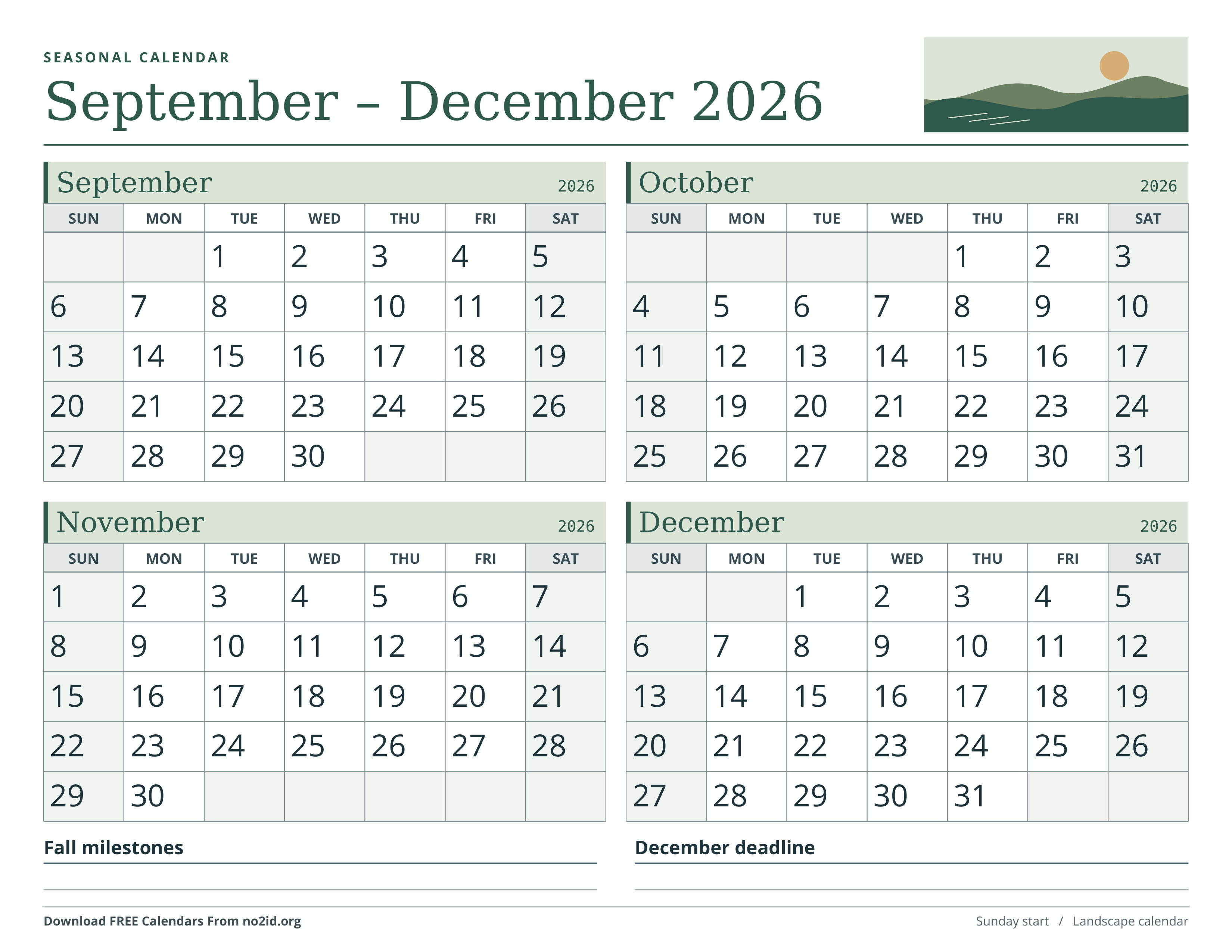
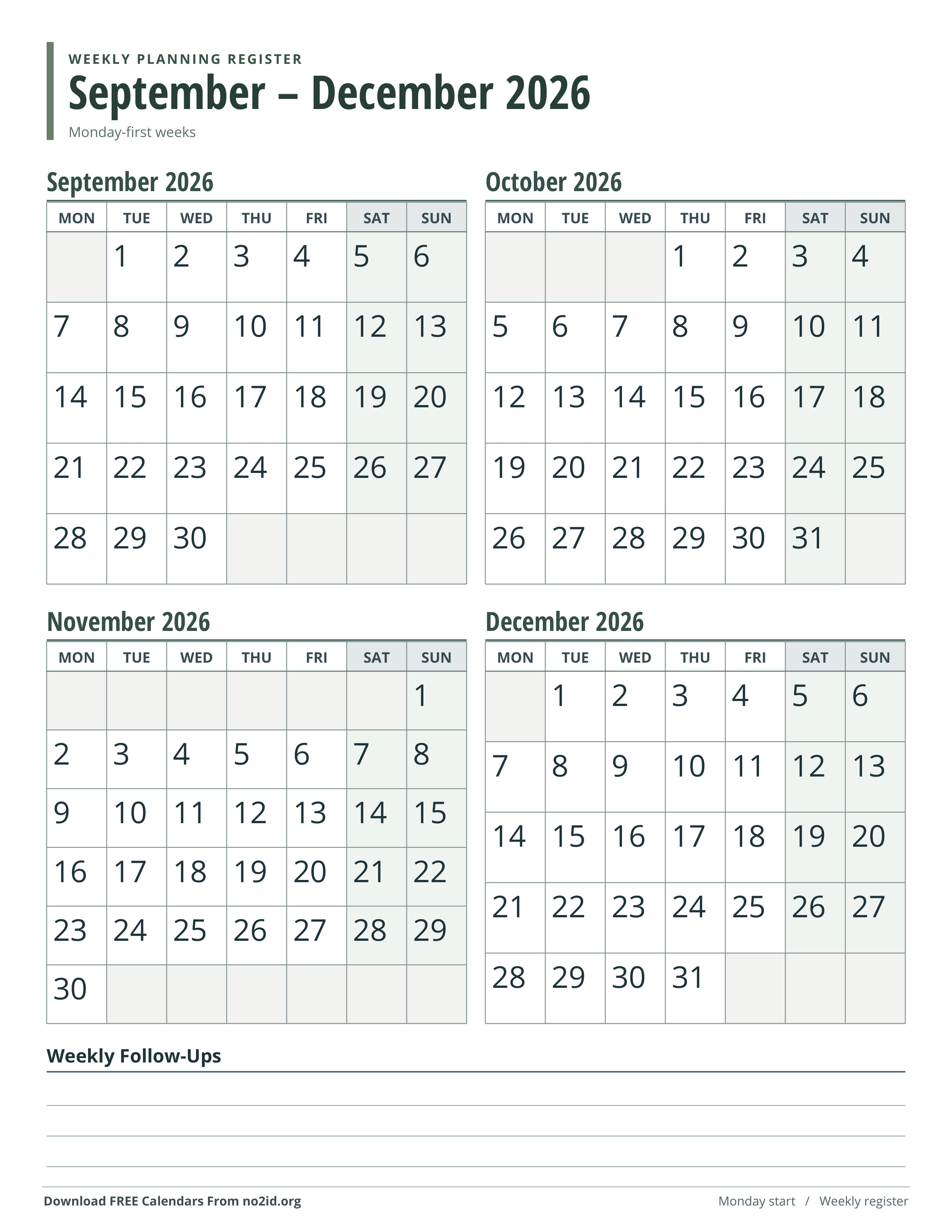
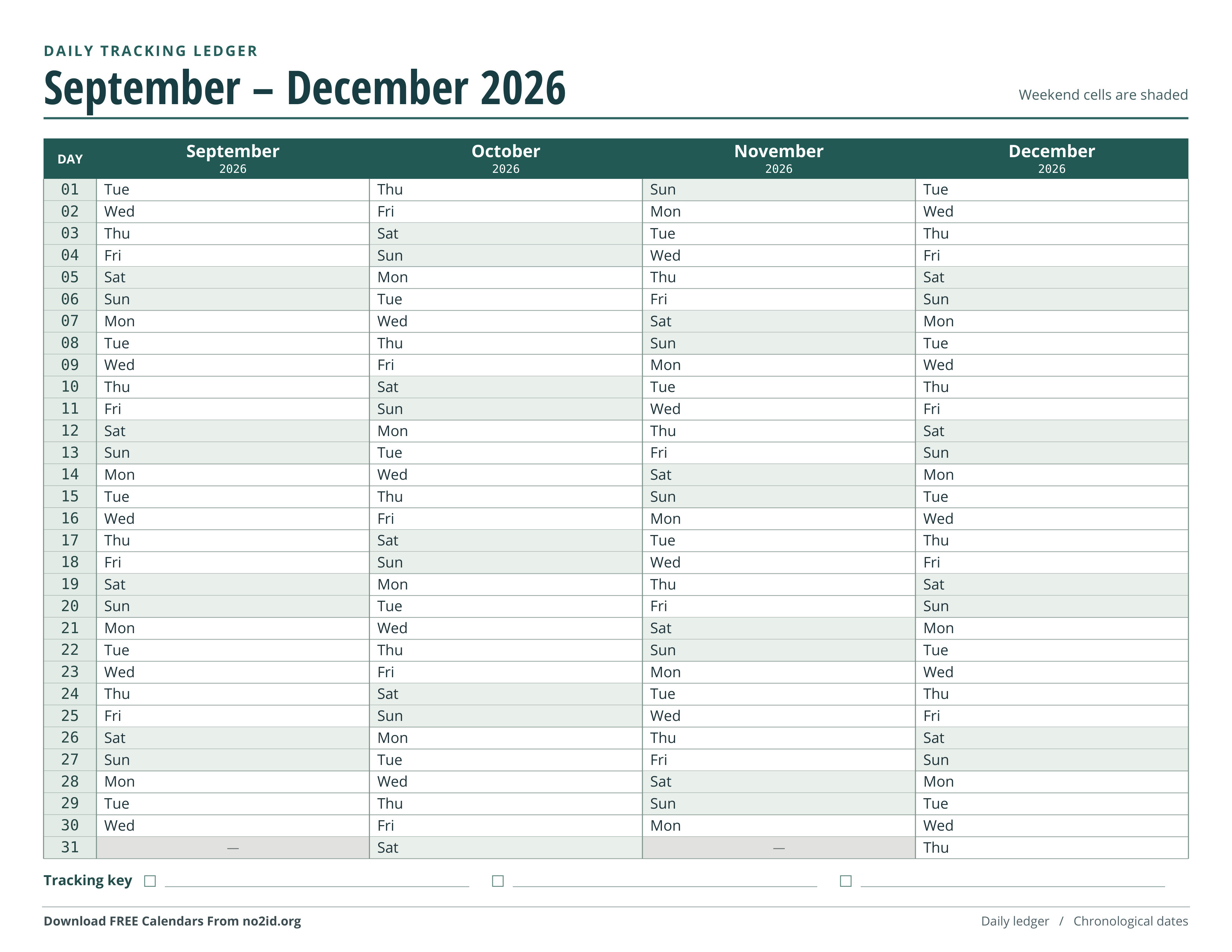
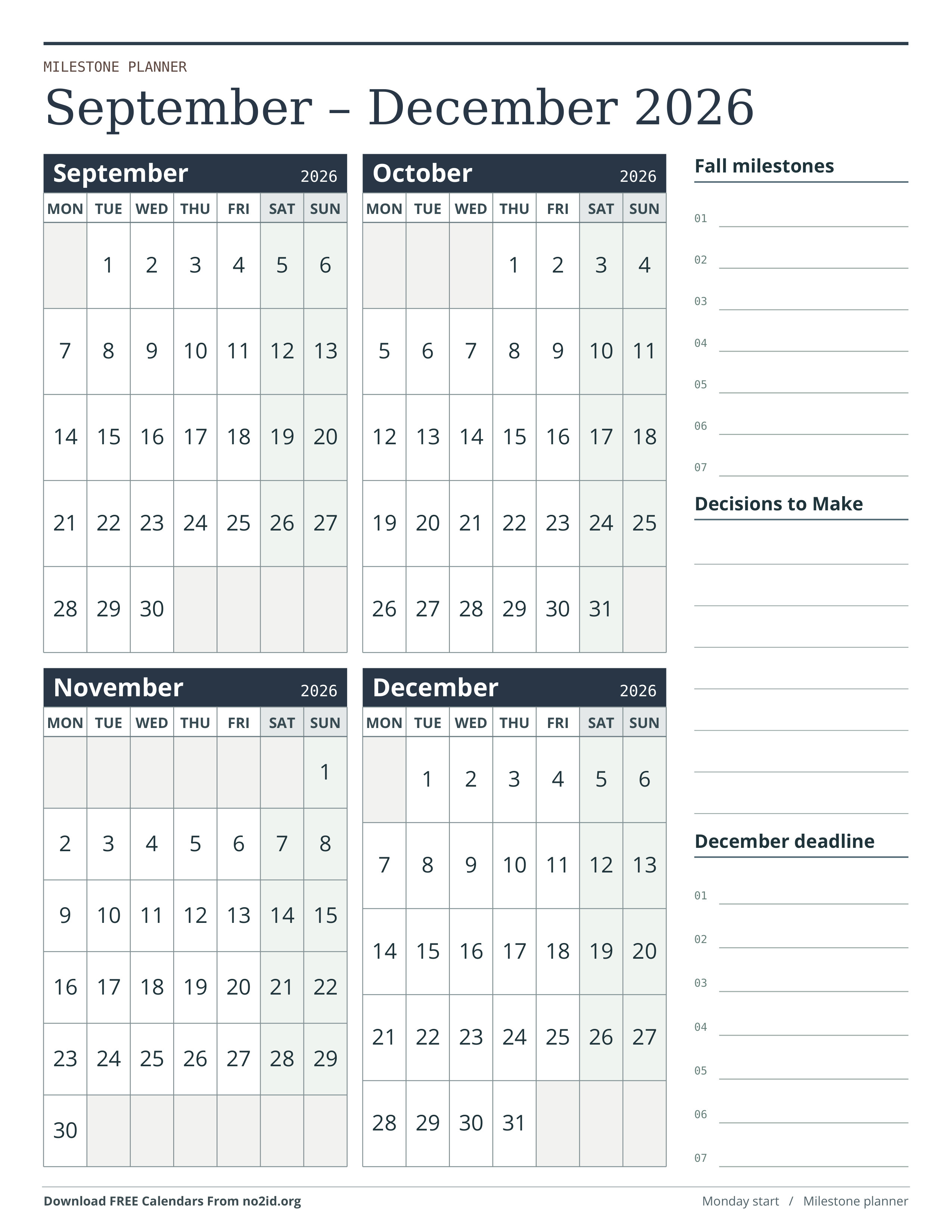
Choose a Term Layout Before Adding Assignments
Use a Monday-first grid if you think of the school week as a unit. A Sunday-first grid can be easier to compare with a school portal using the same convention. For a project that needs several library sessions, try marking a session in the date tracker before committing to a layout. A short mark per visit may be much clearer than writing the project name on every date.
Map a Fall Term on the September to December 2026 Calendar
September 1 is a Tuesday in 2026. October starts on a Thursday, November on a Sunday, and December on a Tuesday. The complete span covers 122 days. Your semester may use only part of it. Identify the first and last dates that apply to your school from its own academic calendar. Shade the unused portion lightly if you like. A December box sitting outside the teaching term can still hold a book return, a portfolio pickup, or a rehearsal.
Gather the syllabus from each class. On the September to December 2026 calendar, copy just the dated work that takes more than one sitting. Keep the original project names. “River inventory” is more recognizable to a student than “science thing,” especially two months after the assignment was announced. Mark dates that the teacher calls tentative with a pencil dot. A tentative test date should catch your attention during planning without becoming an unchangeable fixture for the family.
Find Competition Between Courses
Suppose an English paper is due on Thursday, October 22, and a biology presentation is due the following Monday, October 26. The dates sit in different weeks in some planners, yet the two assignments will need much of the same preparation weekend. Circle the stretch between the last useful library visit and the first deadline. If the student needs a quiet hour to rehearse as well, choose that evening before accepting another commitment.
| What the Syllabus Says | Mark on the Calendar | Action Before That Mark |
|---|---|---|
| Topic proposal due | Topic + course initials | Check the proposed scope with the teacher |
| Group presentation | Present + team name | Reserve one meeting everyone can attend |
| Draft feedback available | Collect feedback | Leave a revision session after pickup |
| Portfolio returned | Pick up portfolio | Bring a folder that fits the work |
Divide a Project by the Evidence It Produces
For a semester project, dated tasks work better when the student can tell what finished looks like. “Research” can eat every open evening and still feel unfinished. “Find two local maps at the library” has an endpoint. In September, schedule the first piece of evidence. In October, set a date to compare sources. In November, reserve a session to turn the notes into an argument or an exhibit. Save a December box for getting the finished piece to its destination.
- Write the due date from the current assignment sheet and check whether the deadline is during class, after school, or online that evening.
- Pick the first milestone someone else can review, such as an outline or a scale sketch. Ask the reviewer which day they can actually respond.
- Reserve time after that conversation for a change. Feedback immediately before a deadline leaves little chance to use it.
- Record the delivery step separately if the work must be printed, mounted, transported, or uploaded from a school computer.
Leave Space for Shared Facilities
A home calendar may show a free afternoon when the necessary room is closed. Check the library, studio, lab, or rehearsal room for the days intended for independent work. If one weekday is the only regular opportunity to use a tool, mark that constraint in the month where it matters. A short entry such as “kiln slot, Tue” tells everyone why the work has to be ready beforehand and why a later evening at home cannot replace it.
- Add concerts and games that require travel or an early call time. A one-hour performance can occupy a much longer part of the day.
- Mark a family absence that removes access to materials kept at home. A project board is difficult to finish from a guest room.
- Note the last confirmed opportunity to ask for feedback before a break or final assessment.
- Keep personal grades and private school details off a sheet that classmates or visitors can see.
Reserve Study Time on the September to December 2026 Calendar
Set a modest target for each reading or study session by working back from the test date the instructor gave you. Four evenings of review might look comfortable until you remember a concert, a group meeting, and a two-hour drive. Put those fixed events in first. A remaining open evening can then hold a defined job, such as explaining a problem to a friend or annotating a practice passage. If only short sessions fit, choose work that can end cleanly within them.
At the end of each month, compare the calendar with the latest school announcements. Move a changed due date with a thin line through the old entry and initial the correction if several people use the sheet. Keep a little space below the printed area for one carryover question, such as whether the instructor still has an original drawing. When the term ends, that question is easy to find without reading four months of classroom notes.
Keep the free printable December 2026 calendar beside the term overview for day-level detail. Add August preparation with the August–December calendar, or use the October–December calendar for the closing quarter alone.