July to December 2026 Calendar spans the second half of 2026, from Wednesday, July 1, through Thursday, December 31. Use the six-month PDF to plan something that needs repeated attention, such as building a portfolio of your work. One spread can hold the date you choose a piece, the date someone reviews it, and the date you send the collection. That wider view helps you spot a common problem: six months of gathering material and a single crowded evening left to edit it.
Free Printable July to December 2026 Calendar PDF
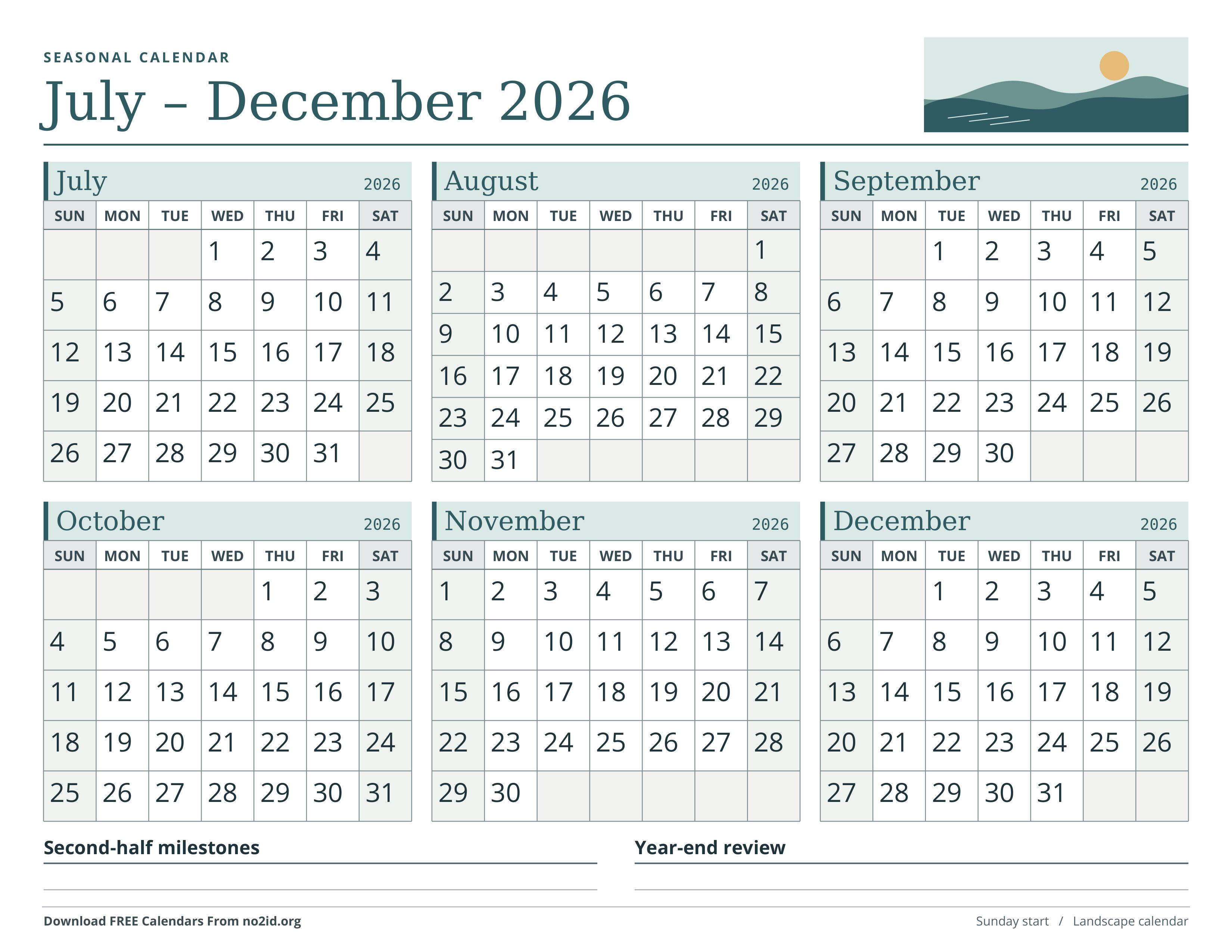
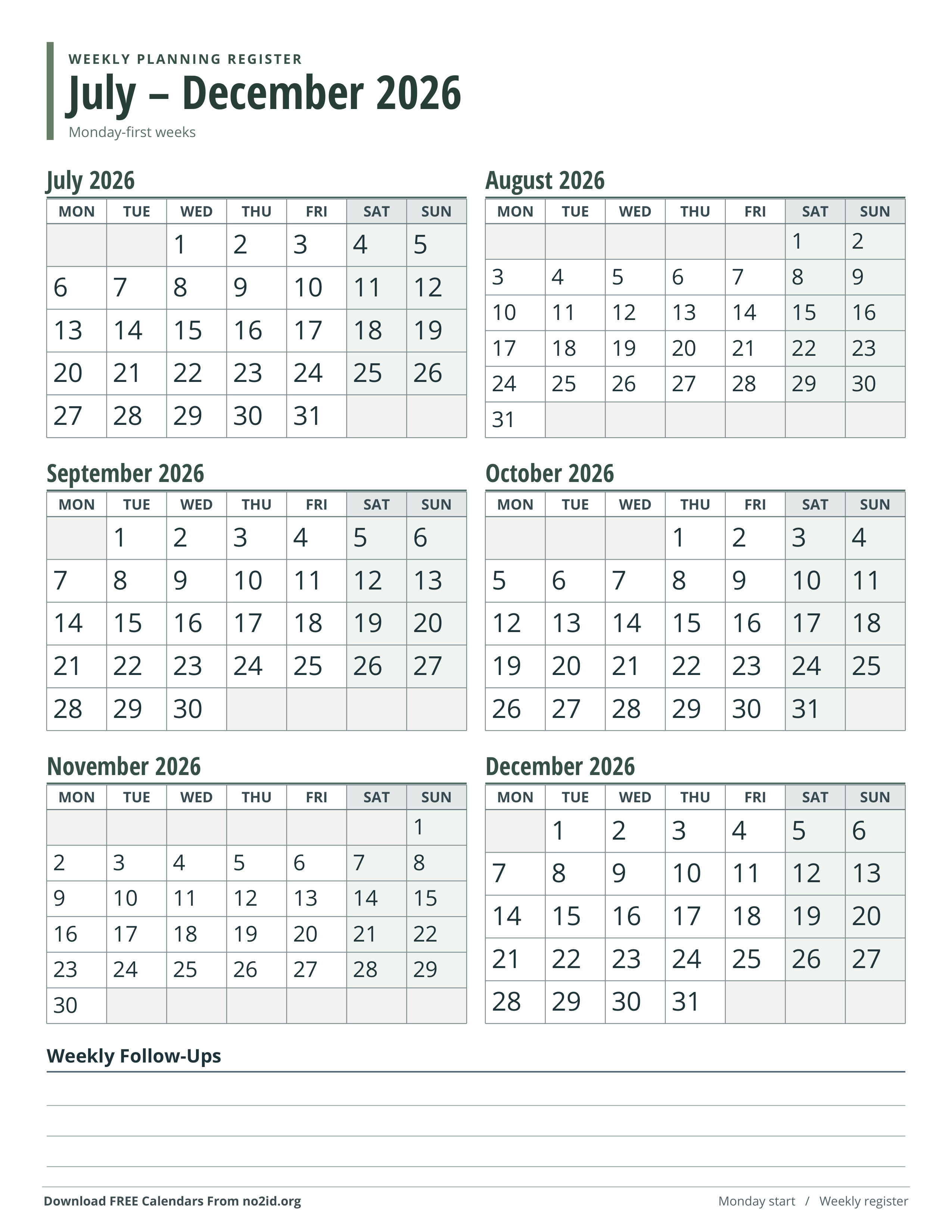
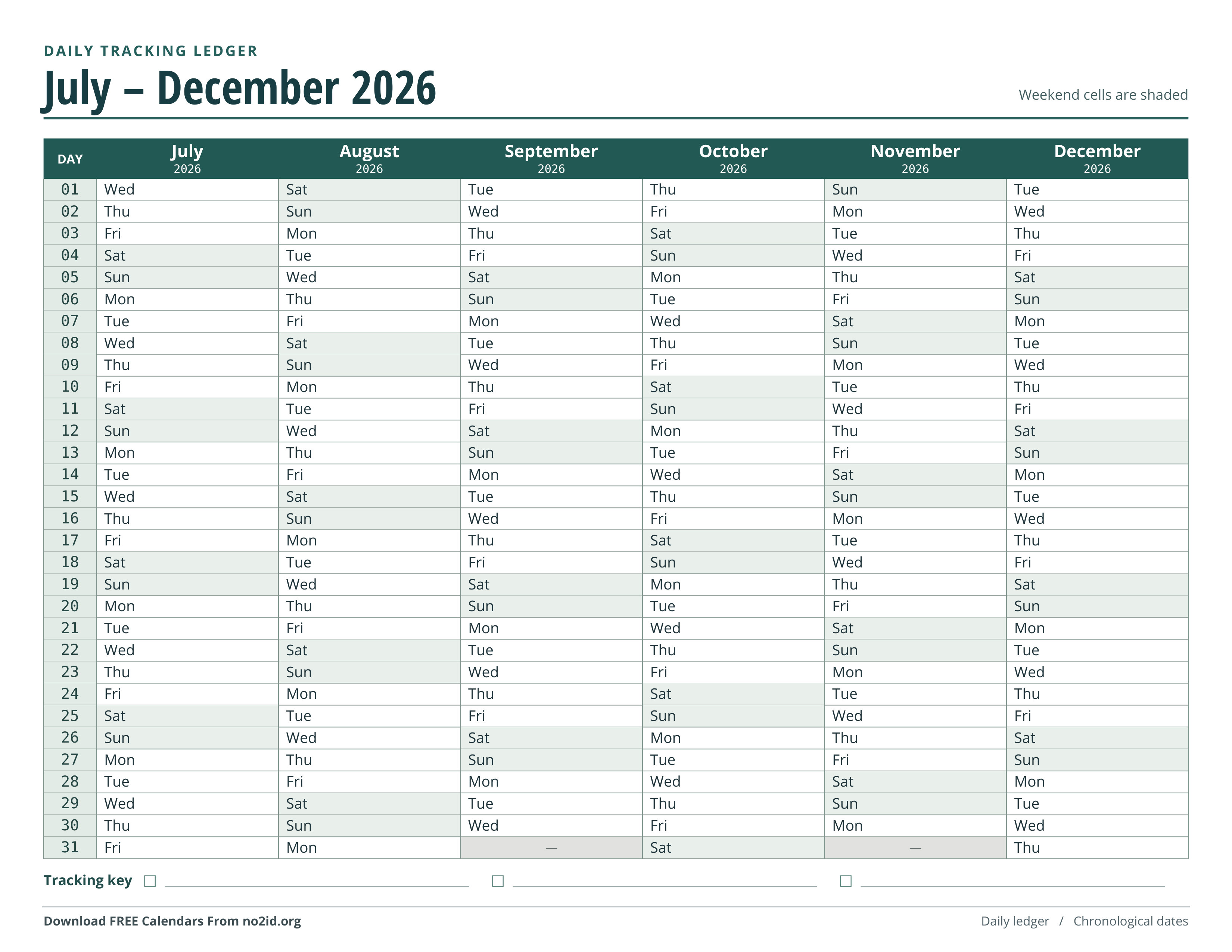
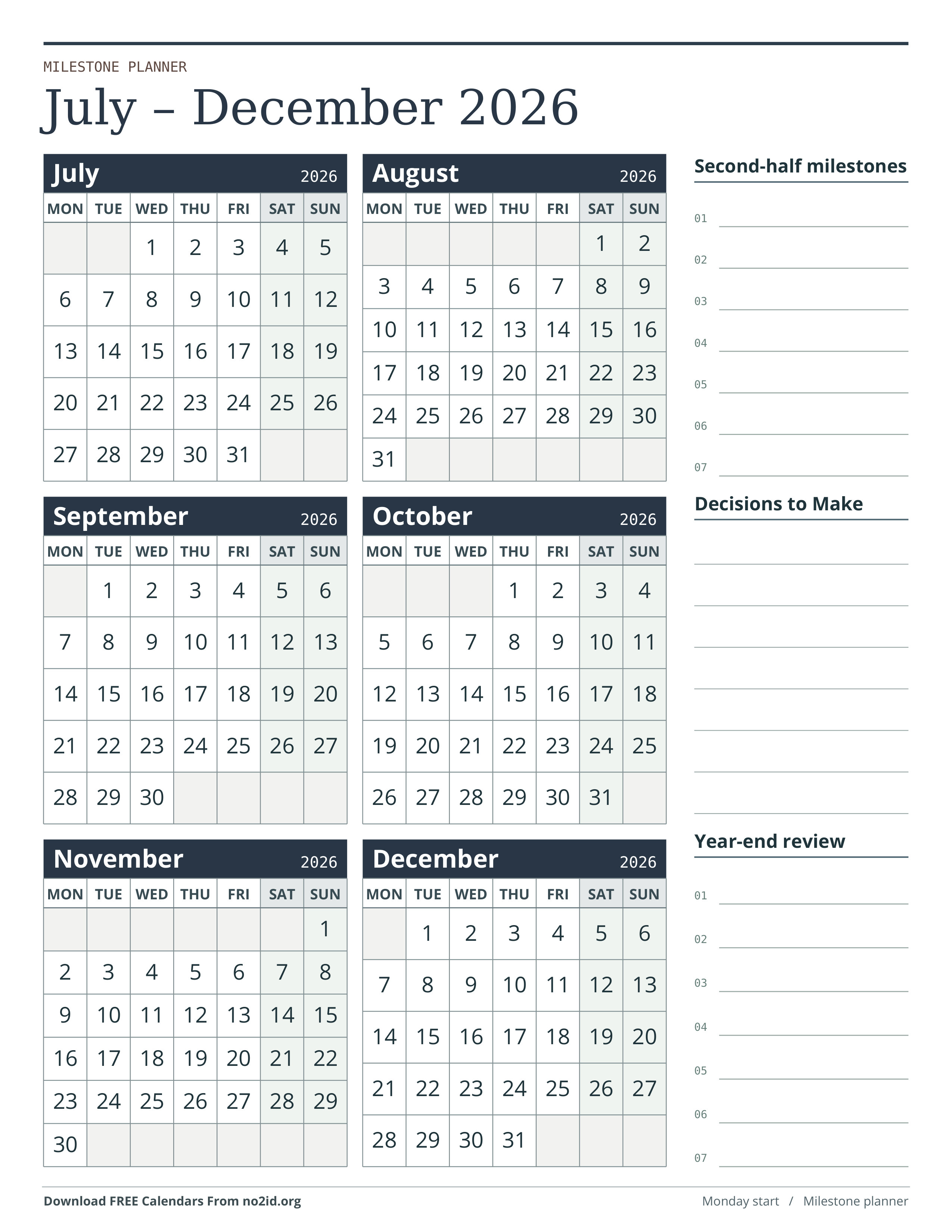
Download July to December 2026 Calendar – four-page print set (PDF)
Match the PDF Page to the Work
For a six-month project you may want a way to see appointments and a way to record work you finished independently. Use a month grid for the appointments. If the more important record is how often you made a new sample, try the date tracker. A single letter on each workday gives you a count at the end of the month without the effort of maintaining a second project journal.
Pick a Finish Line You Can Recognize
Before filling in the July to December 2026 calendar, identify the person who will receive the portfolio. A ceramics instructor asking for photographs needs different evidence than a hiring manager asking how you solved a customer problem. Record the date the recipient expects to see the work. If there is no external deadline, choose a review appointment with a friend or colleague. A date attached to a real conversation gives you a reason to choose what is ready and put everything else aside.
July through December contains 184 days. July and August each have 31, September has 30, October has 31, November has 30, and December has 31. Dividing that span into six identical blocks would hide an important difference. Some months are good for gathering examples, while others will be busy with travel or a new work assignment. Mark known absences first, then build the plan around the time you expect to have access to people and materials.
Divide the July to December 2026 Calendar Into Project Stages
| Period | Main Work | Evidence You Can Keep |
|---|---|---|
| July and August | Gather possible pieces | A dated folder of original material |
| September and October | Select work and test explanations | A short list with reviewer comments |
| November and December | Revise and prepare a delivery copy | A checked file or physical portfolio |
The first pair of months can stay relatively loose. Mark a date after each project when you can save a photograph, draft, or record of the result. Capture the context while you still remember why a decision mattered. A finished object might take ten seconds to photograph and much longer to reconstruct once a client has picked it up. For anything involving another person, confirm permission to share the material before including it in the collection.
Protect the Review and Revision Time
Look for two dates you can offer a reviewer, with a gap after each when you can act on the response. If a colleague can meet only on a Thursday, note that October 1, 8, 15, 22, and 29 all fall on Thursday. Ask which one works before building the rest of your month around a guess. Keep the calendar entry brief. The questions for the meeting belong in a note you can bring along.
- Circle the delivery date and the date you will stop adding new pieces. These are two different decisions and deserve separate boxes.
- Place the first review early enough to replace one weak example without rushing the rest of the collection.
- Reserve a specific day to test the final format. Open the exported file on another device or put the printed pages into the actual binder.
- Add a follow-up date after delivery when a response or return of physical materials is expected. Keep the recipient’s details in your private records.
Use a Missed Checkpoint to Adjust the Plan
Suppose your September review moves into October. Before erasing the old date, look at everything scheduled between the two reviews. A photo session or interview might still go ahead. Work that depends on selecting the final pieces should move with the review. Cross out only the affected items. Keeping the independent jobs intact makes the delay smaller and avoids repeatedly rewriting a whole month because one person was unavailable.
- Use a small square to mark an appointment that involves another person and a dot for work you can reschedule yourself.
- Write an identifying noun such as “chair photos” or “opening paragraph” beside each editing date.
- Mark the last day equipment is available if you need a borrowed camera, display stand, or scanner.
- Keep a short list of alternate pieces elsewhere. The calendar needs a date for choosing between them, not every idea you considered.
Print and Annotate the July to December 2026 Calendar
The PDF preserves the layout of whichever page you choose. Open print preview, choose a single calendar page to test, and confirm that the December edge and footer are inside the printable area. For a portfolio you will carry, print the page on ordinary paper and slip it inside the front cover of the working folder. Clip receipts, contact sheets, or feedback behind it. A copy by the desk can serve as the appointment record while you are assembling the pieces.
Before your December delivery, read the plan from the final date backward. Can you identify the person who reviewed the work, where the original material is, and when you made the last change? If an answer is missing, add the one action needed to recover it. When the portfolio has gone out, retain the annotated sheet with the delivered version. The next time someone asks how far in advance you need a review, you can answer from this six-month record of the work.
Use the free printable December 2026 calendar to expand the final month of the half-year. Bring the start date forward with the June–December PDF, or focus on autumn with the August–December calendar.