December 2026 to March 2027 Calendar keeps a four-month winter program together across the change of year. Try it for a reading circle that starts sharing books in December and wraps up with a discussion in March. The same sheet can show the dates copies become available, the evenings members can meet, and the day borrowed sets must go back. A club organizer can check the entire sequence before promising a title, a meeting room, or a return date.
Free Printable December 2026 to March 2027 Calendar
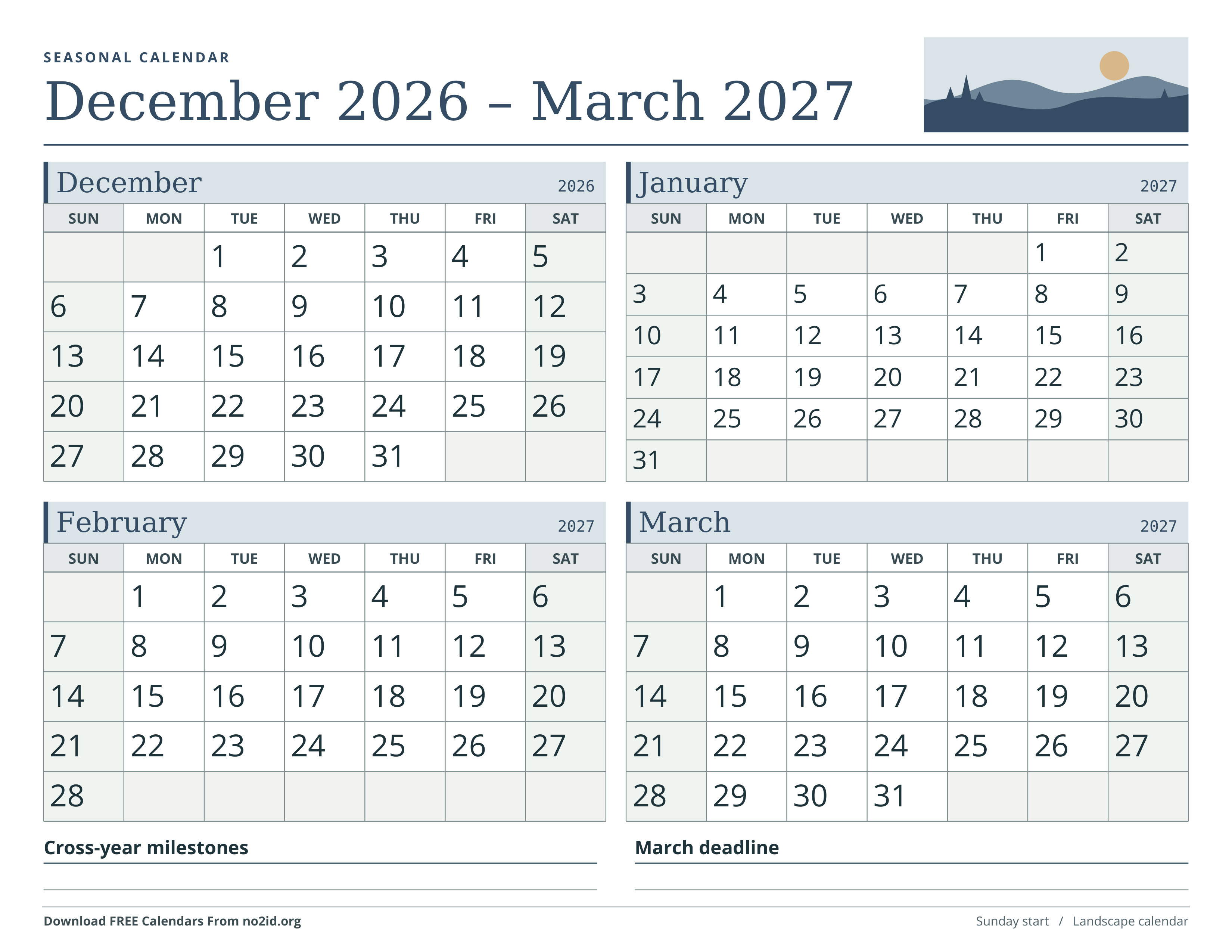
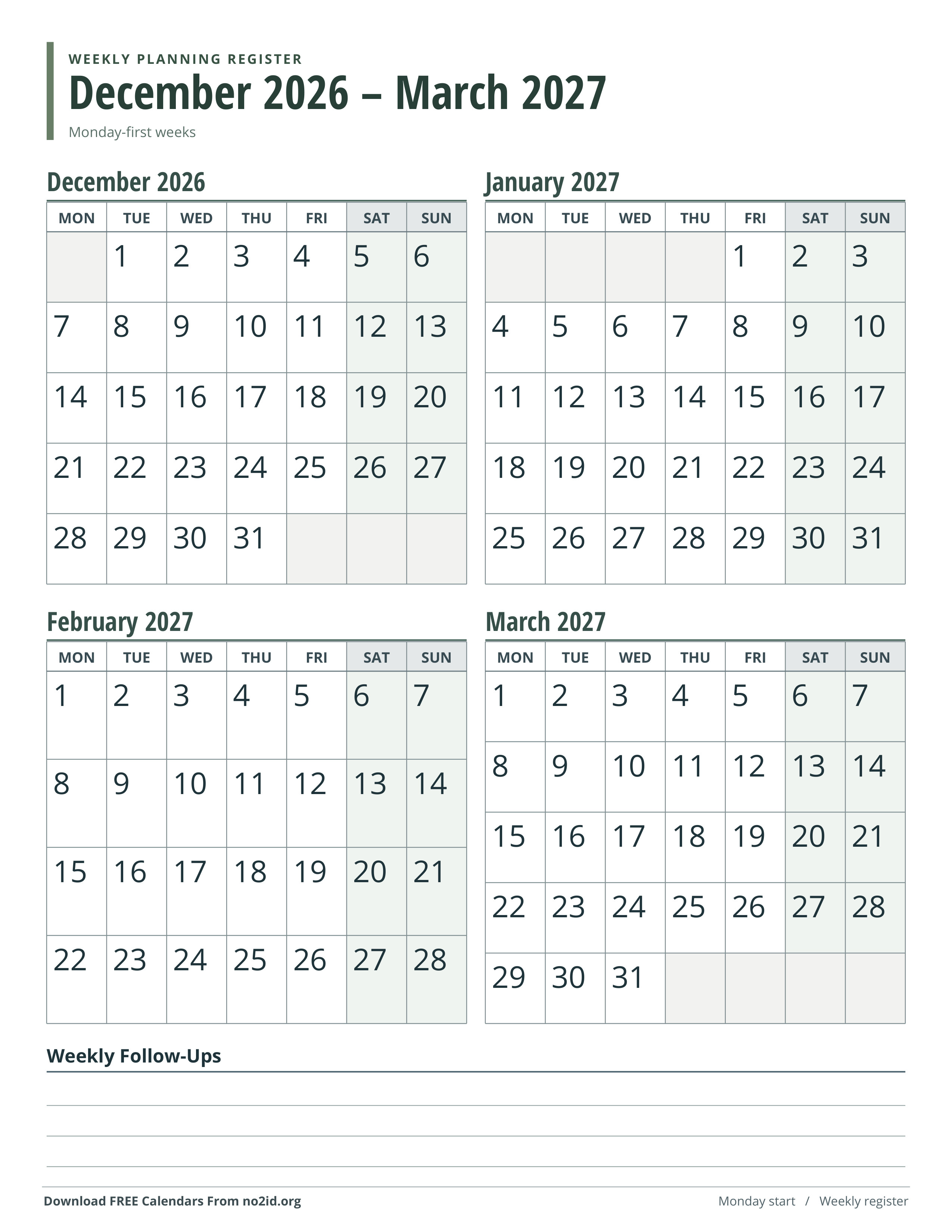
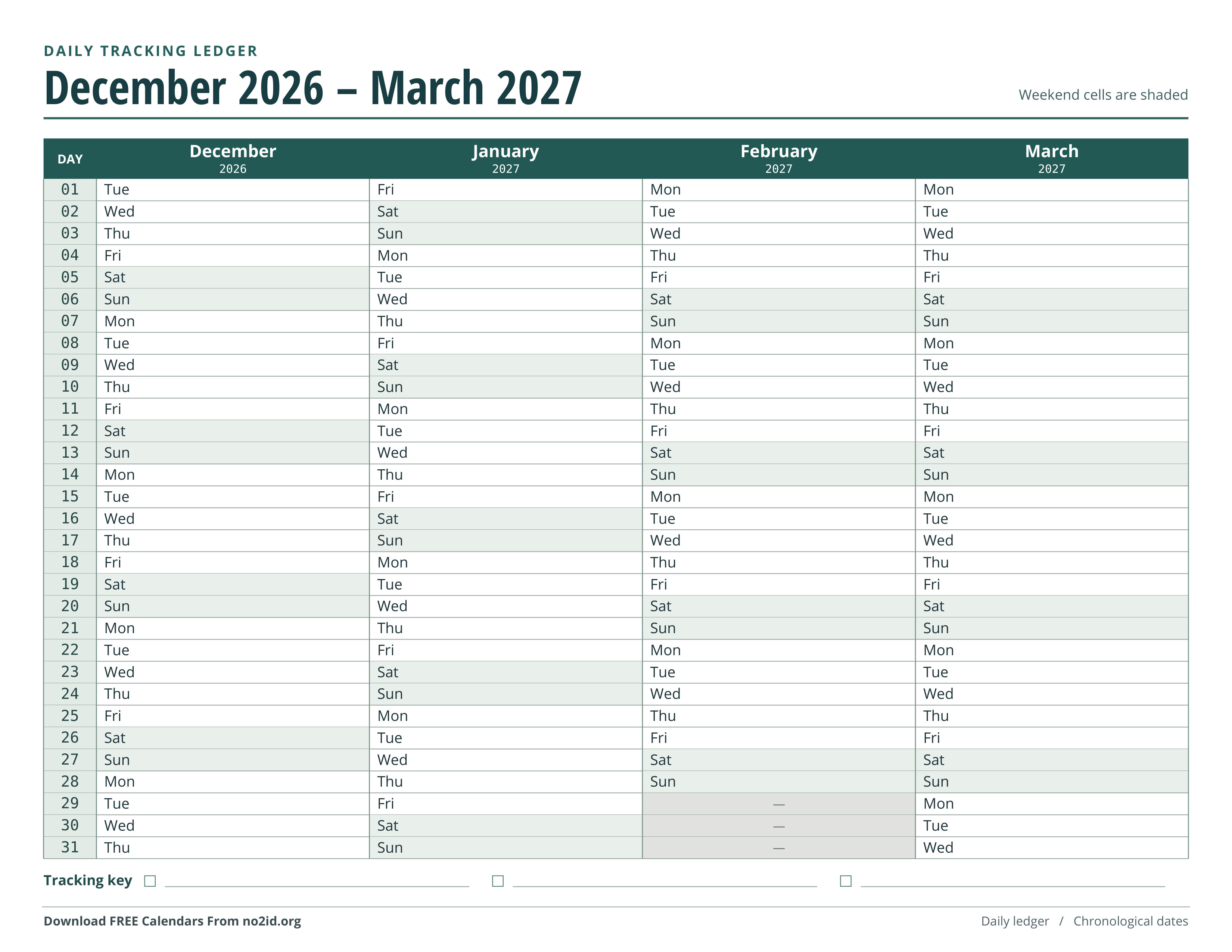
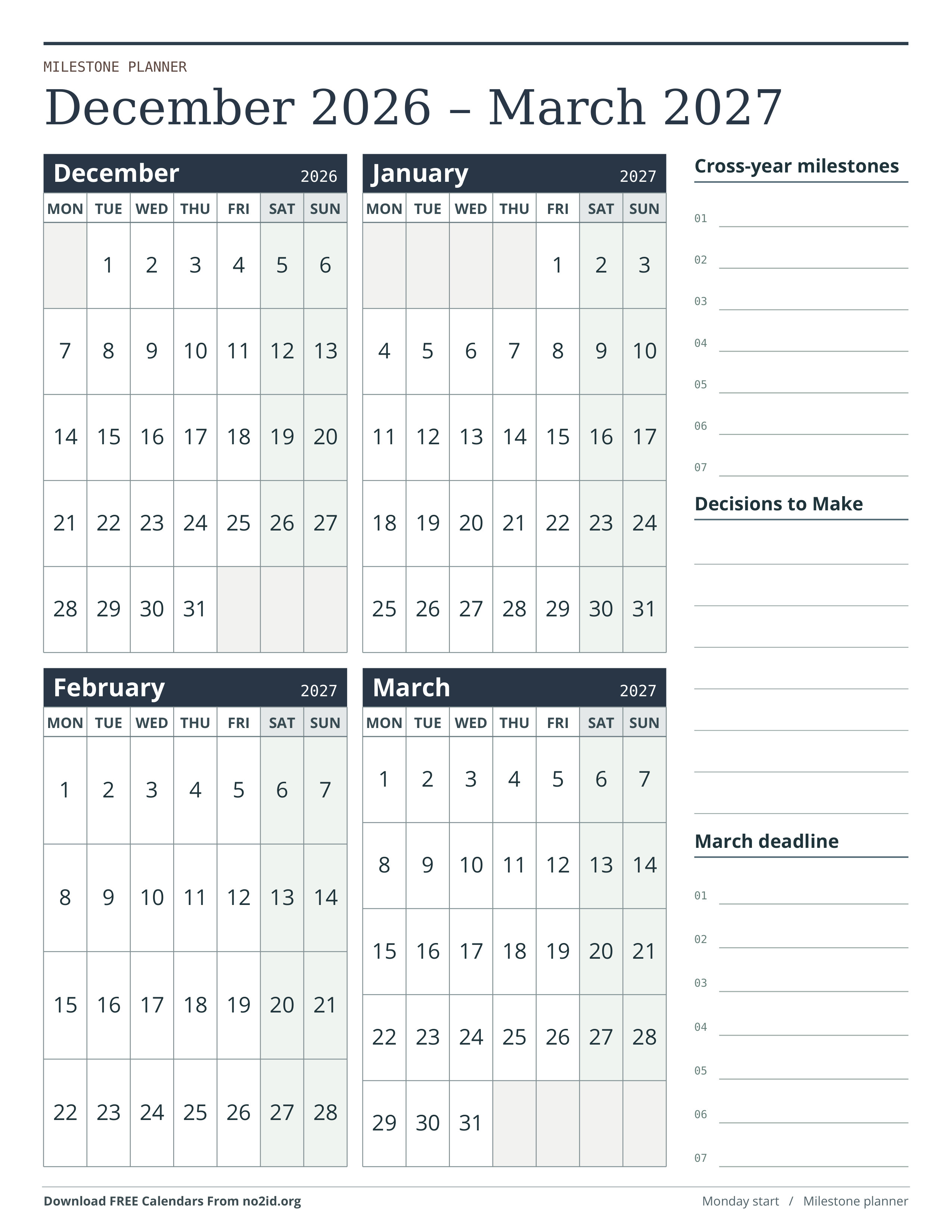
Choose a December 2026 to March 2027 Calendar for the Group
If meetings follow a Monday-first workweek, use a grid with that heading when you propose dates. A Sunday-first layout may be easier for families comparing your program with activities at home. In either case, put the year on a written reminder as well as on the calendar. An invitation created in December may sit in a bag until January, when a date given only as a number is less clear.
Read Across Two Years and a Short February
December 2026 begins on Tuesday and has 31 days. January 2027 begins on Friday and also has 31. February 2027 starts on Monday and has 28 days. March begins on Monday as well and ends on Wednesday the 31st. The four-month window contains 121 days. The matching February and March weekday layouts through the 28th can make a recurring meeting look easy to schedule, but March has three additional dates. Mark each meeting against the correct month heading.
For a club that normally meets on the first Monday, the candidate dates are December 7, January 4, February 1, and March 1. Verify room availability and ask about members’ travel plans before adopting any of them. An early January meeting might come too soon for readers who have been away. Seeing December and January together lets the group decide whether to meet later, choose a shorter work, or agree to discuss the book in two parts.
| First Monday | Example Purpose | Question for the Organizer |
|---|---|---|
| December 7, 2026 | Pick up the first book | Will every enrolled reader have access to a copy? |
| January 4, 2027 | Discuss the opening selection | Have returning members had enough reading time? |
| February 1, 2027 | Exchange copies and notes | Who will collect books from absent members? |
| March 1, 2027 | Hold the final discussion | Is a later date needed for returning the set? |
Plan the Reading Interval Between Meetings
An allocation of “one month per book” gives the organizer very little to work with. Two meetings that occupy adjacent months can be only a few days apart or more than five weeks apart. Start from the first date the reader can physically get the book. If a set will reach the branch on December 14 and the meeting is January 4, readers have three weeks between those dates. Count from pickup as well if people have different work or travel schedules.
Give Each Book Its Own Trail of Dates
- Record the confirmed day copies can be picked up, together with a short title or author name. Keep the complete reading list with your sign-up materials.
- Pencil in the discussion date and compare it with the return date on the lending record. A group may need the copies in hand for the conversation.
- Arrange a collection option for members who cannot attend. Give one person responsibility for the return and put their initials beside the actual deadline.
- Enter the pickup for the next title separately. Someone who misses a discussion should still be able to see when the following book arrives.
Use February’s Shape to Catch Scheduling Mistakes
February and March share the same first four Mondays in 2027. The fifth Monday shown in March is the 29th, a date February never has that year. If a group agrees to meet on the “last Monday,” its February meeting would be the 22nd and its March meeting the 29th. “Fourth Monday” would instead produce the 22nd in both months. Write out the agreed wording and check the actual boxes before sending either date to the group.
- Give a confirmed meeting a solid circle and a room request awaiting approval an open square.
- Mark the day an accessible copy or audiobook becomes available if that changes when a reader can join the discussion.
- Add the last collection opportunity before a return when the person holding the set cannot visit the library every day.
- Keep members’ borrowing records off public copies of the schedule. A title and a pickup time are enough for the common page.
Use the December 2026 to March 2027 Calendar at Meetings
A group that starts in December may fill the last month with ambitious plans before knowing its reading pace. Leave some flexibility around the final gathering. One possible sequence is a discussion in early March, a voluntary exchange of recommendations later in the month, and a firm date for returning the book set. If the first discussion runs late, you can shorten the optional piece while still meeting the return commitment.
Choose the layout that allows participants to find the next date quickly. A month grid works well at a pickup table, where someone can point directly to the next meeting. A day-by-day layout is handy in the organizer’s folder for marking calls, collections, and the last package returned. Test the month labels on a printed sheet if people will read it while standing. A person holding a stack of books should be able to find the January meeting with one glance.
After the closing discussion, keep the page until the lender acknowledges return of the complete set. Jot down when the copies actually became available and the first evening most readers could attend. When the group chooses another winter title, those two dates will tell you how much reading time this calendar delivered in practice.
Keep the December 2026 calendar printable for immediate winter plans. If only the year boundary matters, print the December–January calendar. Add detailed weekly work on the monthly schedule planner.