June to December 2026 Calendar puts a June kickoff and a December finish on the same printable sheet. Those seven months give a project enough room for a trial, a revision, and a handoff. The PDF is especially handy when the people involved meet only occasionally. Bring the marked page to each meeting and ask whether the dates somebody else depends on are still realistic. Meeting notes and technical details can stay in the project folder.
Free Printable June to December 2026 Calendar PDF
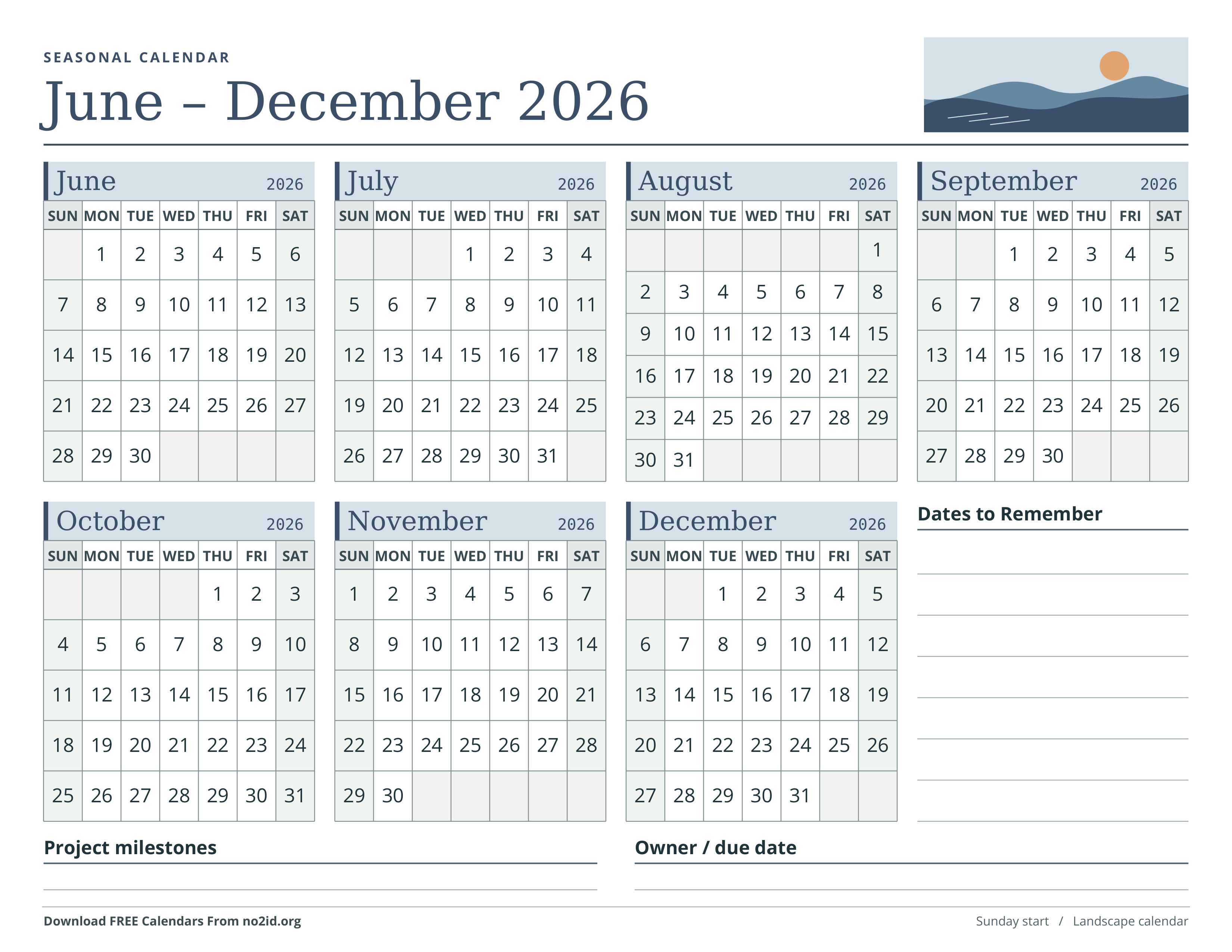
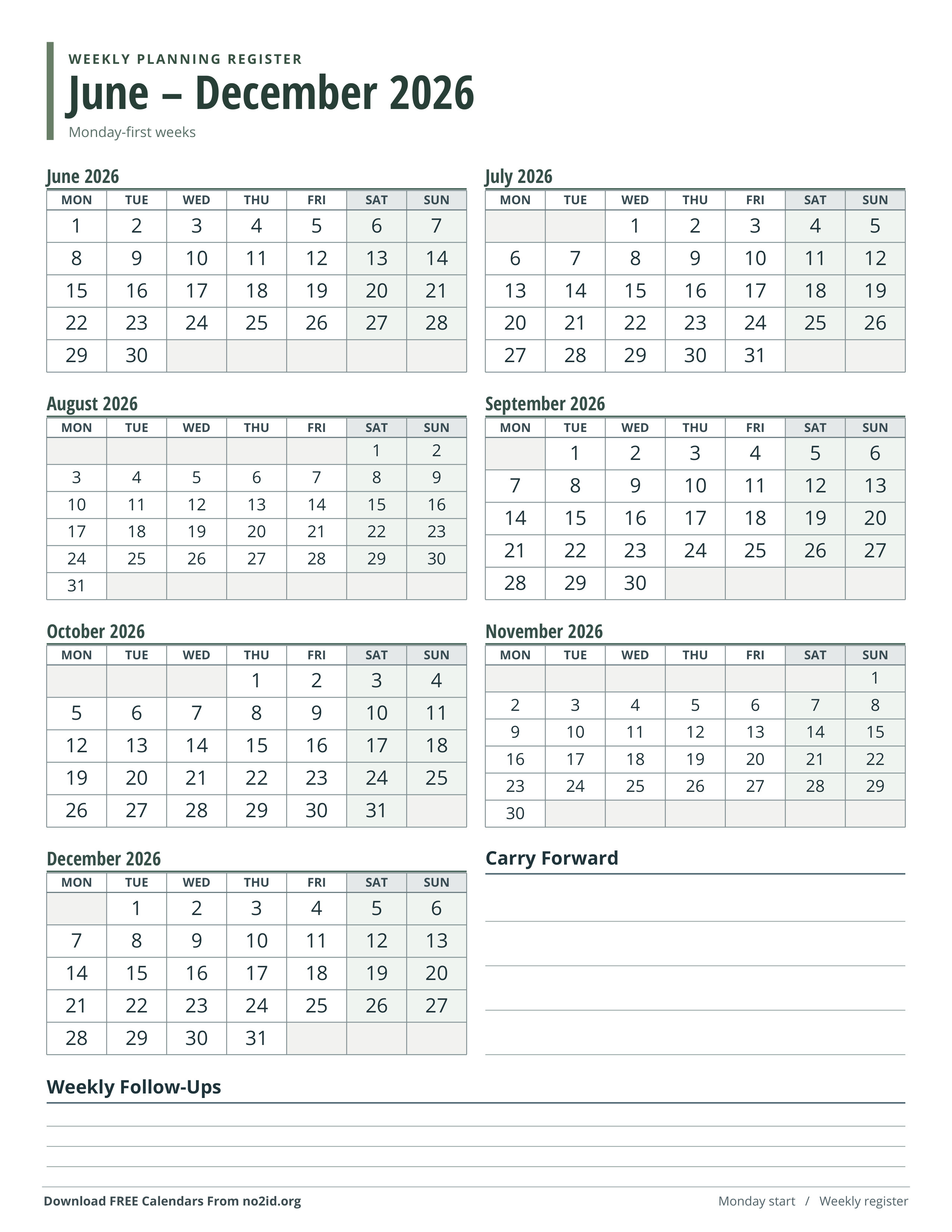
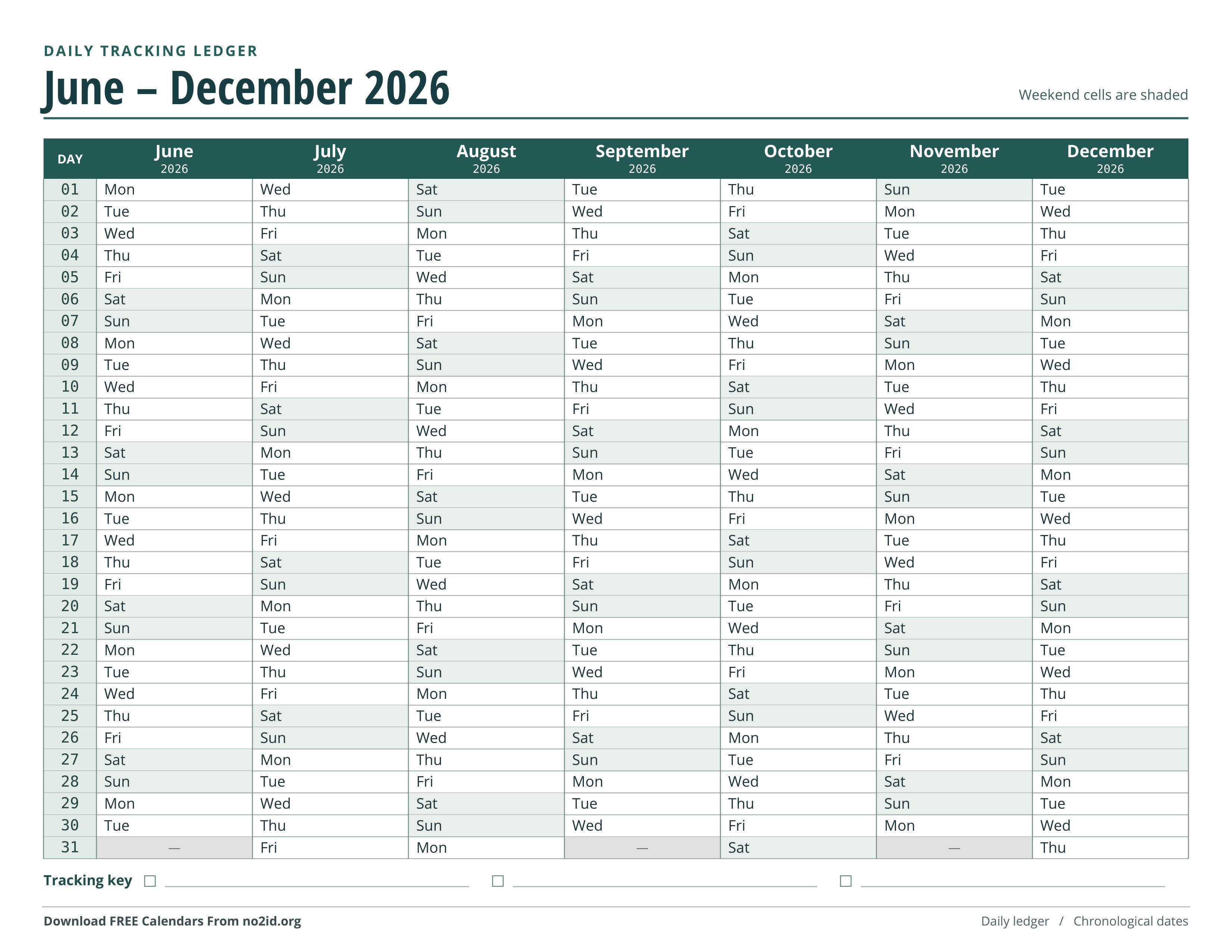
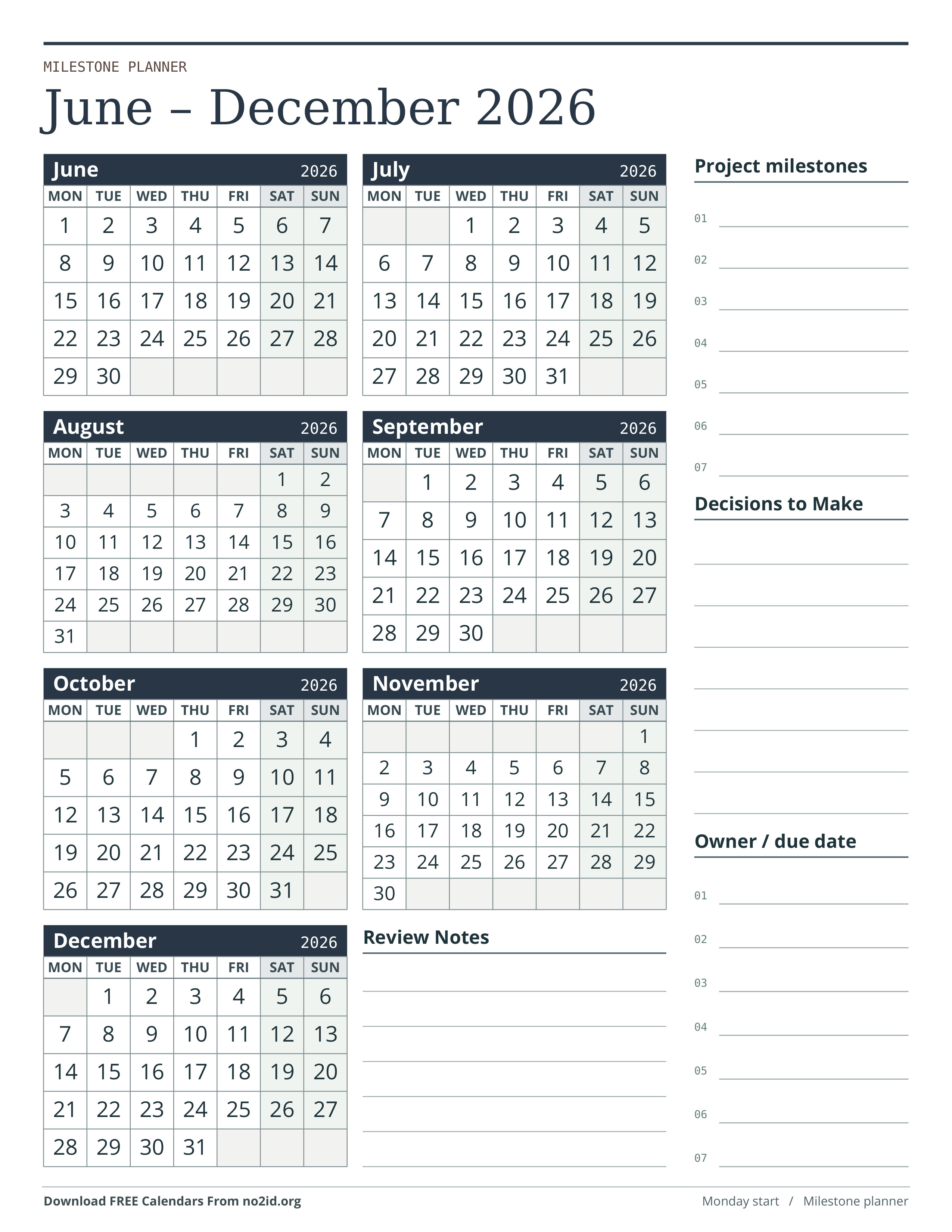
Download June to December 2026 Calendar – four-page print set (PDF)
Choose a Page for the Planning Meeting
The Sunday-first view works when the group wants a familiar wall calendar for its seven months. A Monday-first page with a milestone area serves a different conversation. Write one open decision there, and leave it visible until someone assigns a date. Before printing copies for the group, write a sample label on the busiest month to see how much detail it can sensibly hold.
Choose the Part of the Project That Needs Seven Months
Take a local history group building a small exhibition. In June its members can agree on a room and theme. In July and August they can interview contributors and locate objects. A September trial arrangement can reveal which labels or photographs need replacing. In October and November the group can finish the material, leaving December for opening, taking down the display, and returning items. These are sample stages. A project earns a space on this calendar whenever changing its date affects the work that follows.
June 1 is a Monday in 2026. The seven-month span ends Thursday, December 31, and contains 214 days. If your team holds a kickoff on the first Monday in June, its next first-Monday meeting falls on July 6. Count the recurrence from the printed weekday headings. Four weeks after June 1 is still in June, so simply counting twenty-eight days would put the July meeting on the wrong date.
Put a Deliverable Next to Each Decision
| Project Question | Useful Evidence | Calendar Entry |
|---|---|---|
| Will the display fit? | A measured sketch of the room | Review floor plan |
| Can an item go on view? | A reply from the person lending it | Confirm loan |
| Are labels readable? | A sample seen under the room lights | Test labels |
| When can the room reopen? | Confirmation that items and stands are gone | Release room |
Mark Waiting Time on the June to December 2026 Calendar
A borrowed item may need a reply from its owner before anyone can design a label. Estimating the work as “one afternoon” leaves out the two weeks the owner might be away. Write the date you sent the request, then choose a follow-up date you can reasonably explain to the person receiving it. If the owner replies sooner, fill in the return date immediately. Each mark answers a different question at the next meeting.
- Select one milestone that proves the project can move ahead. For the exhibition, this might be a signed room booking or permission to display the central object.
- Write the date you need that evidence and work backward to the first person you must ask. Put that action on a day when they are reachable.
- Identify the work that can happen while you wait. Measuring frames or writing a short introduction may be possible before every item is confirmed.
- Give unconfirmed items a decision date. On that day choose whether to substitute another piece, shorten the display, or agree on a later opening.
Preserve an Honest Version of the Original Plan
Use a pen for the first public date and pencil for the intermediate dates you expect to move. If the opening changes, cross the original date once and record the new one. A volunteer looking at an older poster can then see why their recollection differs. For a change that affects several people, write the date of the announcement in the margin or on the back. You can check who needs an update without rereading a long email thread.
An inexpensive way to compare plans is to print two PDF pages, one for the first agreed schedule and another for the working schedule. Date each copy. At a review, look for a task that moved twice or a decision that keeps returning to the agenda. Either might indicate missing information. Asking for the missing measurements may accomplish more than adding another tentative installation date.
- Give a single name to each item across the calendar, meeting notes, and loan list so everyone can find it.
- Save room on the December grid for collection times and the person responsible for unlocking the space.
- Record the last practical day to order a replacement using a real supplier estimate.
- Mark the review where the team will decide which work to leave out if it falls behind.
Hand Over the Project With Dates Someone Can Use
A project can open on time and still finish badly if nobody has arranged to return the keys. Before the last month begins, ask the receiving person what they need to acknowledge completion. The answer could be an empty room, an inventory with signatures, or a copy of the finished guide. Write the date you will deliver that item beside the name of its recipient. If a volunteer must be present, confirm the time with them separately.
Choose a landscape June to December 2026 calendar for a meeting table when several people need to follow the sequence together. A portrait version slips more easily into the folder containing the measured sketch and permissions. Test a single sheet before printing one for everyone. You should be able to find each month heading and read a penciled initial under normal meeting-room lighting. When the December handoff is complete, attach the marked copy to the inventory. Next year’s group can see how much of the seven months the work actually took.
Pin the free printable December 2026 calendar beside your project overview for final deadlines. The May–December PDF includes a May setup period, and the July–December PDF starts cleanly in July.