May to December 2026 Calendar gives gardeners and other seasonal planners an eight-month record that reaches beyond the busy part of summer. Keep the PDF beside a garden journal to connect the day you planted something with the days you picked it, stored it, or decided to grow it differently. The May-through-December span gives a household room to record spring preparation, summer visits, fall cleanup, and winter decisions on the same sheet.
Free Printable May to December 2026 Calendar PDF
Download May to December 2026 Calendar – four-page print set (PDF)
Pick the Right Page for Outdoor Notes
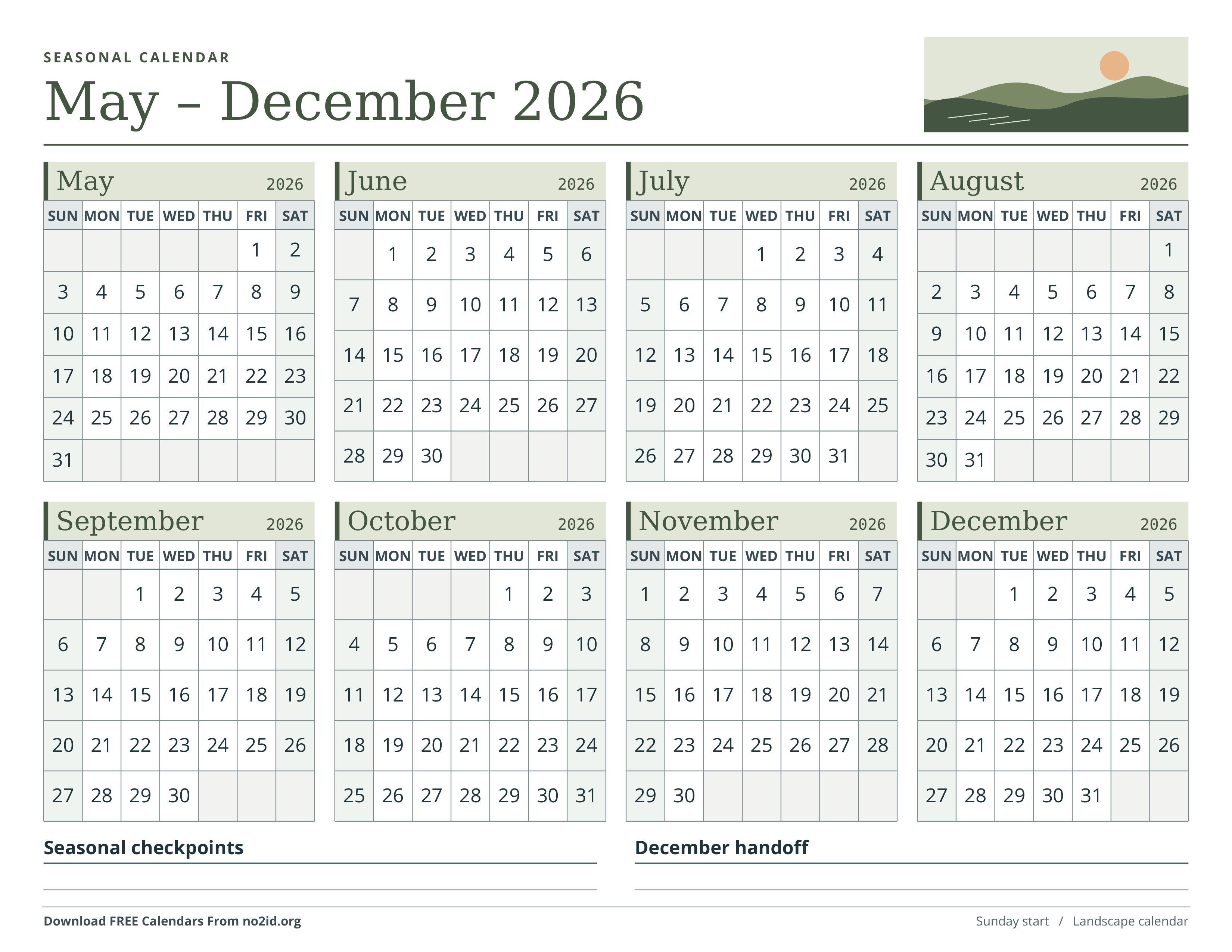
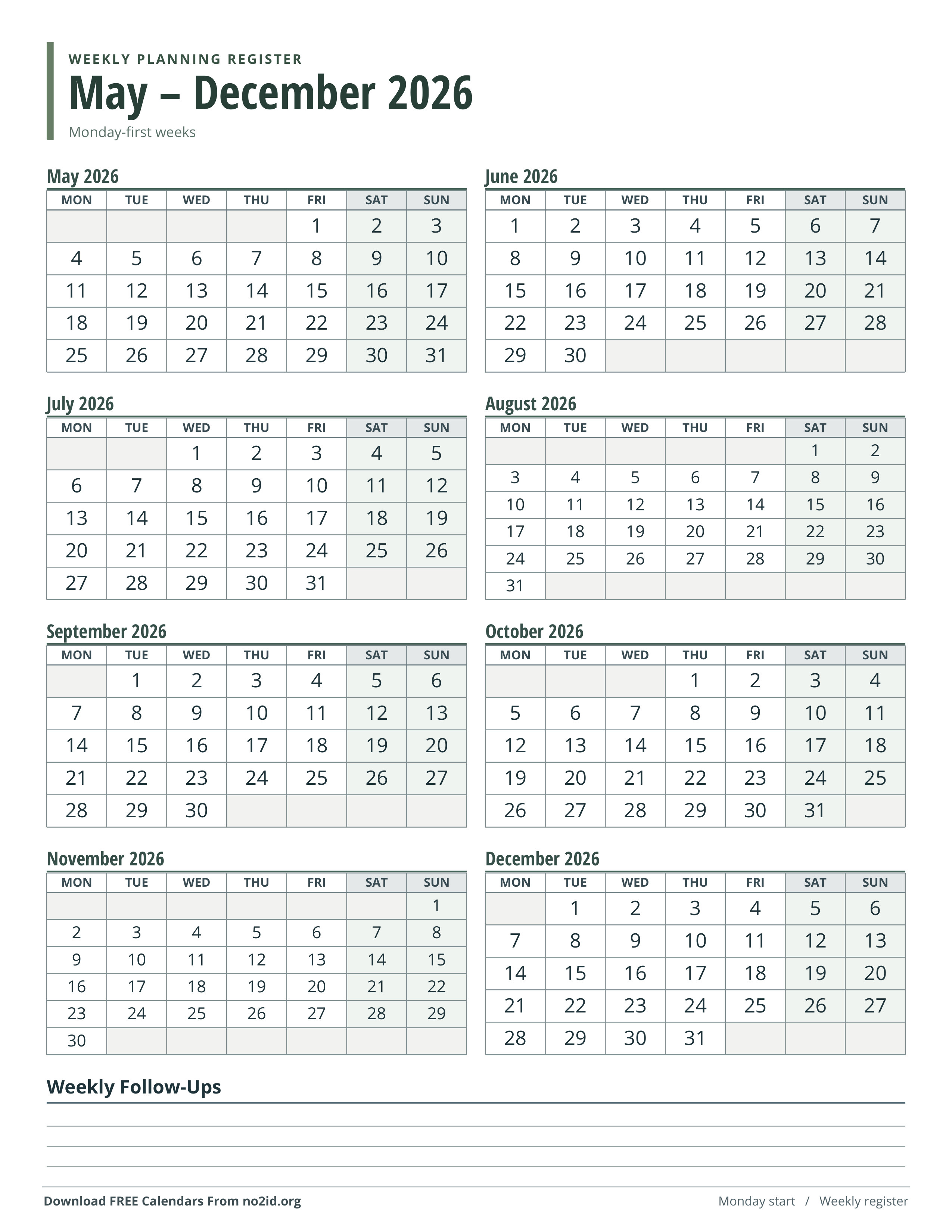
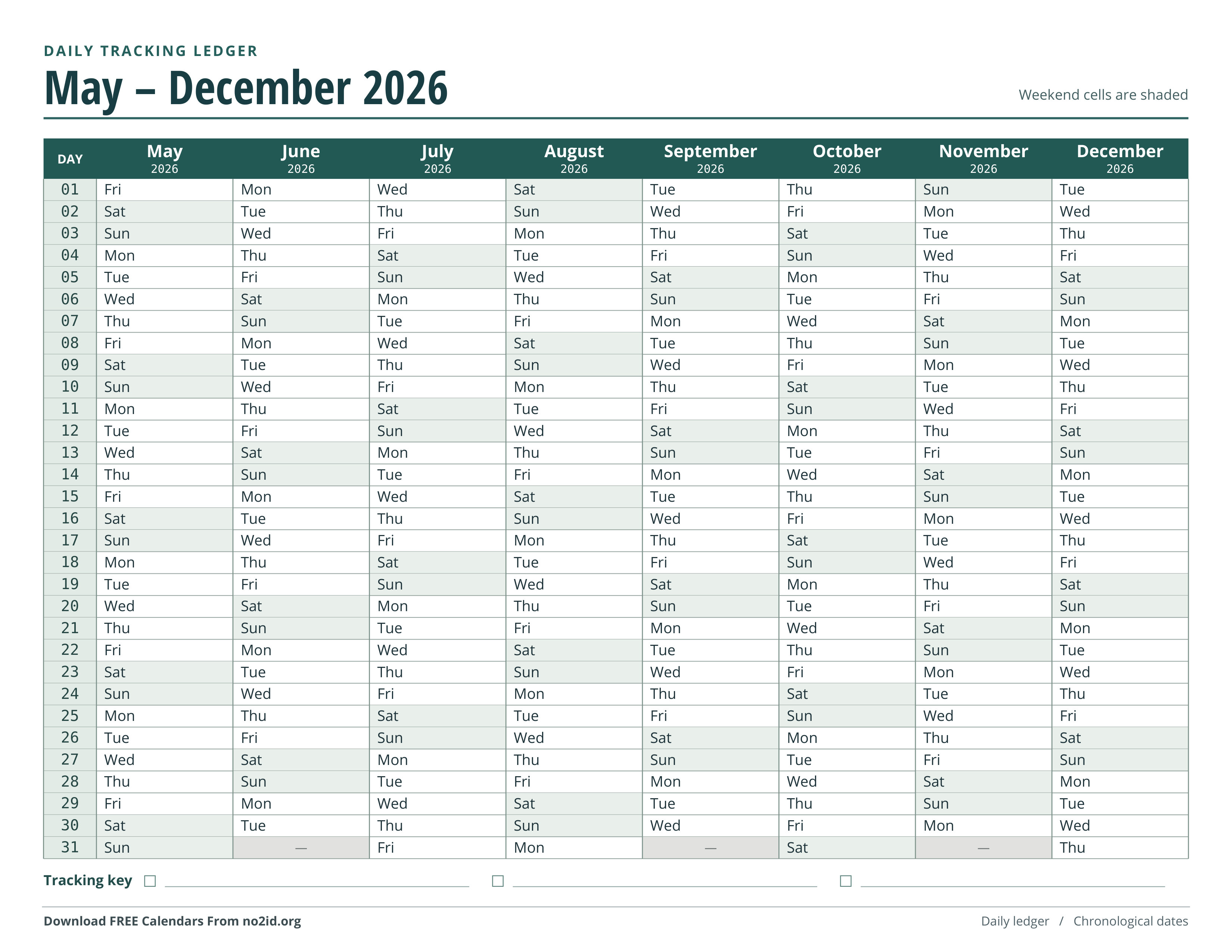
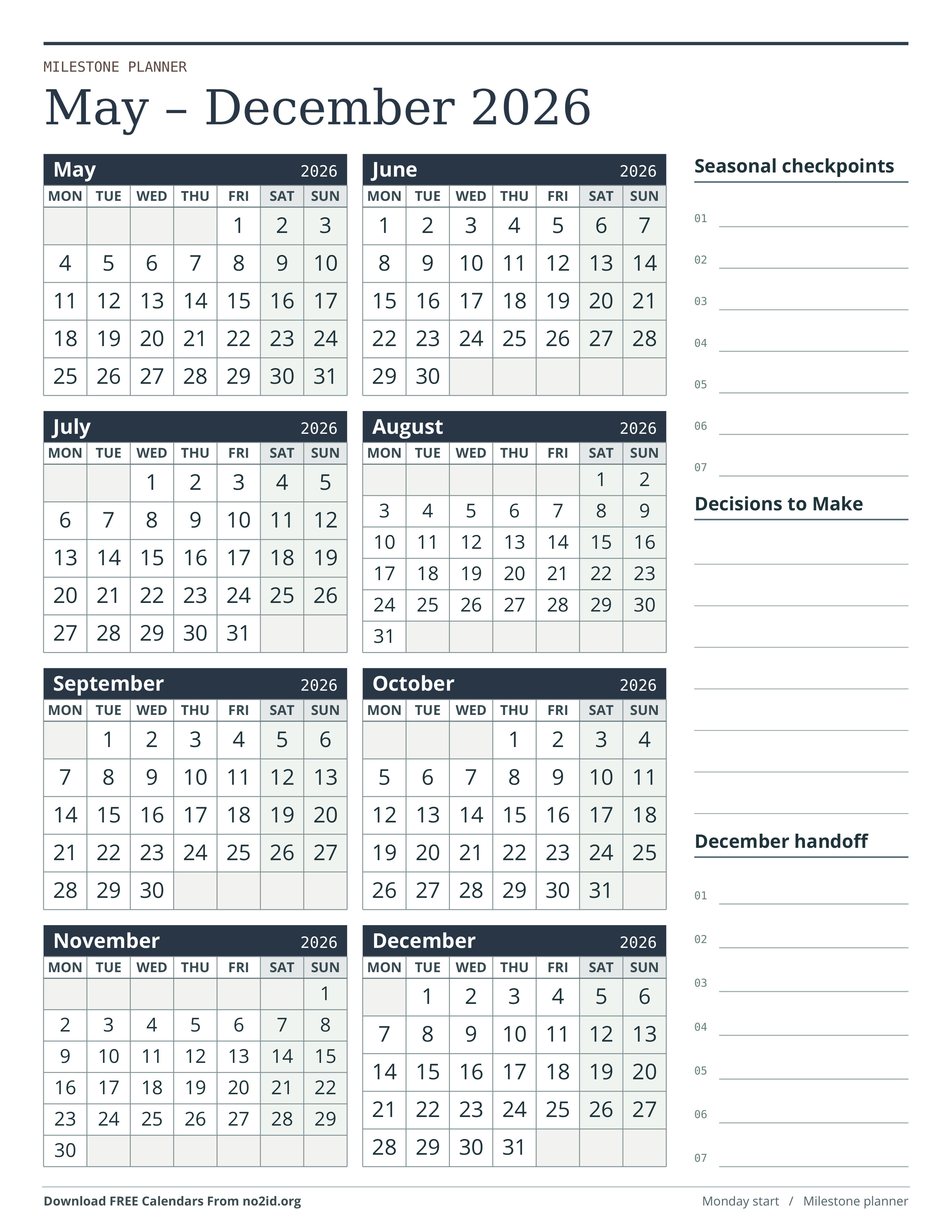
If you take the page outside, choose a layout that can stay on a clipboard without turning it sideways. Mark one visit at a time, then bring it back indoors before it gets damp. A landscape month panel works well above a potting bench for planning ahead. The day tracker makes a useful desk copy when you want to count individual watering visits or harvest days.
Plan Around What Happens in Your Own Garden
May starts on Friday in 2026, while December ends on Thursday. The eight months contain 245 dates. That wide window is a record of time, not a planting prescription. A gardener in coastal California may be tending beds quite differently from a gardener in Minnesota on the same October morning. Use local guidance for planting windows, then record what actually happened in your plot. Your first ripe tomato or the day irrigation was shut off has more value next year than a generic seasonal label.
Give each bed a short, memorable name. “Fence,” “steps,” and “back pot” are often easier for a helper to recognize than numbers. Record the first action important enough to compare later. If you plant beans in two batches, write the dates beside the same bed name with a distinguishing letter. When you pick the first handful from each batch, copy the same letter. You will have a useful comparison without having to squeeze a miniature garden journal into each box.
| Garden Record | Short Entry | Question It Can Answer Later |
|---|---|---|
| First planting in a bed | Fence beans A | When did this batch go in? |
| First usable harvest | Pick beans A | Which batch produced first? |
| Helper scheduled | Pat, water pots | Who is covering the trip? |
| Last equipment pickup | Collect hose reel | When will storage space be needed? |
Record Garden Observations on the May to December 2026 Calendar
One gardener may want to know how long the household went between harvests. Another wants to know which month was busiest for watering a group of containers. Choose a question before you invent a color system. If you care about harvest spacing, an initial beside each picking date is enough. If you care about the weight of the crop, keep the measurements in the journal and put a small mark on the calendar to show where the full entry belongs.
Arrange Watering Visits While You Are Away
- Circle the dates you expect to leave and return. Record separately whether someone will be home for the morning or evening visit on those days.
- Pick the check-in dates with the person who will help. Show them the actual containers, water source, and the instructions specific to your plants before you go.
- Use a short identifier for each visit and leave room for a helper’s initials. Keep your contact details in the handoff note.
- On your first day back, read the helper’s marks before resuming the usual routine. A visit made shortly before you arrived may change what you do that evening.
Give the Fall Cleanup a Start and an End
Late in the season it is easy to write “clean garden” on one weekend and postpone the whole job when the weather changes. Instead, choose actions small enough to move individually. Emptying a storage shelf can happen indoors. Collecting plant supports needs access to the beds. Returning borrowed tools may depend on a neighbor being home. Mark the dates that involve another person first, then select a few shorter opportunities for work you control yourself.
- Record the day you first noticed damage to a crop and the page in the journal where you described it.
- Mark the actual date you stopped harvesting a bed rather than the date you expected to clear it.
- Note the place and date for returning shared equipment so a helper can handle the exchange if necessary.
- Put one December evening aside to review the year’s records while ordering lists and seed packets are still available.
Read the Patterns in Your May to December 2026 Calendar
A month-grid design works well if the important question is which weekend a helper can visit. A date tracker makes it easier to compare a repeated action across months, such as picking herbs for the kitchen. Select the layout for the record you want to keep. Print a test page and write your longest bed name in one square or row. If it crowds the date, shorten the identifier before you label eight months of entries.
In December, compare the May to December 2026 calendar with a few photographs or notebook entries. Counting the days between planting and the first harvest can be informative if you compare the same crop, location, and meaning of “first harvest.” A single cherry tomato and the first bowlful for dinner describe different milestones. Write a sentence beside the saved sheet explaining what your mark meant. Someone using the calendar next spring can then interpret your numbers as you intended.
Finally, save one concrete decision for the next growing season. You might move a second container closer to the tap because it was repeatedly missed during a trip, or start a new batch earlier because both harvests arrived together. Circle the dates that support the decision. The eight-month record then connects a practical change to the observations behind it.
Use the free printable December 2026 calendar to handle December appointments individually. Include earlier preparations on the April–December PDF or remove the opening month with the June–December PDF.